Finding the Most Reliable Garage Door for Your Montreal Home
Choosing a new garage door isn’t only about curb appeal. Reliability—the door’s ability to keep working year after year with minimal trouble—matters even more when you live in a place like Montreal, where −25 °C cold snaps, road-salt spray, and humid summers all punish exterior materials. Spoiler alert: the insulated steel sandwich door consistently tops the charts as the most reliable option—but read on to discover exactly why and how the other materials compare. This in-depth guide ranks today’s main residential garage-door types by durability, upkeep demands, weather resistance, insulation value, and total cost of ownership, so you can confidently select the door that will serve you longest.
What Does “Reliable” Really Mean?
For this article, a reliable garage door is one that:
- Structural durability – Resists warping, denting, cracking, or rot for at least 20 years.
- Low maintenance – Requires little more than cleaning and lubrication—no annual painting, staining, or rust-patching.
- Climate resilience – Performs in sub-zero cold, high humidity, and road-salt exposure without premature failure.
- Hardware friendliness – Places minimal stress on springs, rollers, and openers (lightweight or well-balanced).
- Insulation potential – Accepts high-R-value cores so you save energy and reduce condensation.
- Repairability – Uses widely available parts and simple panel swaps rather than full replacements.
Quick Overview of the Main Materials
| Door Type | Typical Construction | Notes |
|---|---|---|
| Single-layer steel | 24–27 ga. galvanized sheet, hollow | Lowest cost; dents easily. |
| Steel sandwich (insulated) | Two steel skins + polystyrene or polyurethane core | Heaviest-duty residential option; many styles. |
| Wood | Solid cedar, hemlock, or plywood frame + veneer | Classic look; high upkeep. |
| Wood-composite | Engineered wood over steel or composite frame | Better stability than solid wood. |
| Aluminum & glass (full-view) | Extruded aluminum frame + tempered glass panels | Modern aesthetic; low rust risk. |
| Fiberglass skin / steel core | Fiberglass sheets bonded to steel frame, often foam-insulated | Light weight; resists salt corrosion. |
| Vinyl (PVC) skin / steel frame | Rigid vinyl cladding over steel stiles and rails | Won’t rust or rot; limited style variety. |
Pros, Cons, and Lifespan of Each Door Type
A. Steel Doors
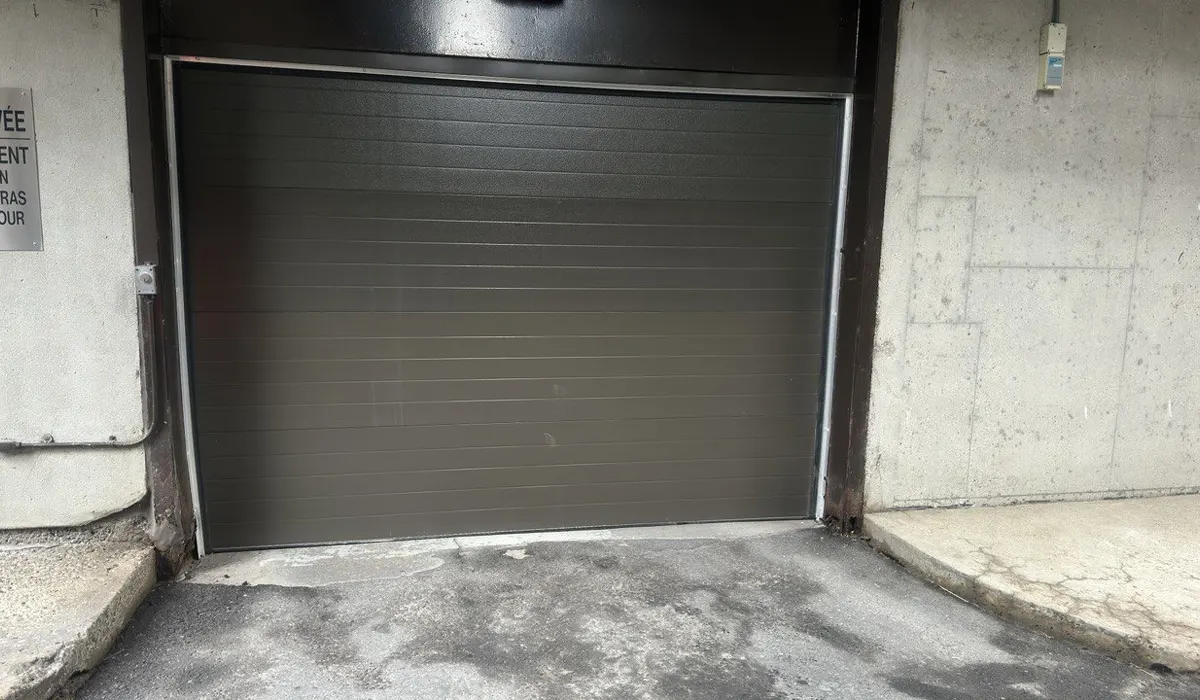
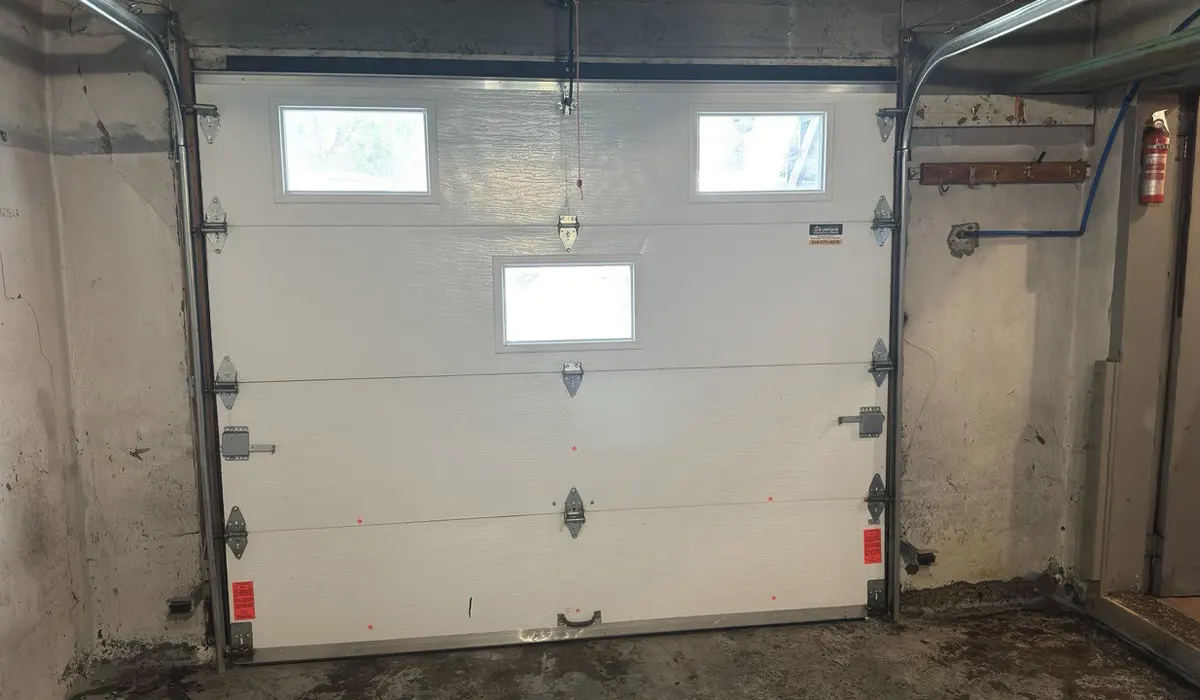
Why homeowners love them: Strength, endless design options, excellent insulation, and modest cost. Modern “steel sandwich” doors use 24- or 26-gauge outer and inner skins bonded to high-density polyurethane foam, creating a rigid, energy-efficient panel that rarely warps. Steel doesn’t crack, rot, or warp and needs only periodic wash-downs.
Potential weak spots
- Prone to cosmetic dents from hockey pucks or hail.
- If the paint coat is breached, bare metal can rust—important on busy, salt-sprayed streets.
Life expectancy: 25–30 years with minimal maintenance.
Montreal takeaway: Choose a two-layer or three-layer galvanized steel door with baked-on finish; wash salt residue each spring to prevent rusting seams. Polyurethane insulation (R-12 to R-18) keeps garages warmer and reduces frost on tracks.
B. Wood Doors
Warm, authentic, and historically prestigious—but wood is the least forgiving material in a freeze-thaw climate. Panels swell in humidity, shrink in cold, and eventually crack. Yearly sanding, painting, or staining is mandatory. Neglected edges rot quickly.
Pros: Timeless beauty; easy to repair small gouges with filler; excellent impact resistance.
Cons: Highest upkeep cost; heavy (stresses springs); susceptible to carpenter ants and mold.
Life expectancy: 15–20 years if meticulously maintained; far less if not.
Montreal takeaway: Lovely on heritage homes, but reliability suffers unless you commit to annual refinishing.
C. Wood-Composite (Engineered) Doors
Factory-sealed composite overlays give a “carriage-house” look with less warping than solid wood. They still need painting every few years and weigh nearly as much, so spring life is shorter than steel.
D. Aluminum & Full-View Glass
Extruded aluminum frames won’t rust and are light, easing strain on hardware. Tempered glass panels provide daylight and modern flair. However, aluminum dents easily, and large glass panes drop R-value to as low as R-3 unless using expensive insulated glazing. The upfront price runs $4 000–$8 000 or more for a double door.
E. Fiberglass-Skinned Doors
Fiberglass is salt-proof and lightweight, reducing opener wear. It can mimic wood grain convincingly and won’t dent like thin steel. Drawbacks: poorer insulation unless combined with thick foam, and panels may yellow after UV exposure. High-winds can flex thin skins, loosening adhesive over decades.
F. Vinyl-Clad Doors
PVC skin shrugs off dents, moisture, and insects. Color is molded through the material—no painting. Downsides: limited colors (mostly white, beige, or grey), and vinyl becomes brittle below −20 °C; an impact can crack a panel in extreme cold. Insulation depends on the core (usually polystyrene).
How Montreal’s Climate Affects Reliability
- Deep freezes (−25 °C and colder): Constricts metal tracks, thickens lubricants, embrittles plastics, and overloads openers. Springs often break on the coldest mornings.
- Road-salt spray: Accelerates corrosion on exposed steel edges, hinges, and fasteners. Stainless or zinc-plated hardware extends life.
- Humidity swings: From −20 °C dry air to +30 °C summer humidity stresses wood fibers, causing expansion–contraction cycles.
- Wind-driven ice pellets: Chip paint and dent thin-gauge aluminum or steel skins.
- Power outages: Reliable manual operation matters; lighter doors (steel sandwich, aluminum) are safer to lift.
Reliability Ranking & Best Choice
| Rank | Material | Key Reliability Strengths |
|---|---|---|
| #1 Most Reliable | Insulated Steel Sandwich Door | Longest service life, structurally rigid, excellent weather/impact resistance, wide R-value range, low upkeep. |
| #2 | Vinyl-Clad Steel Frame | Rust-proof skin, minimal maintenance, good impact tolerance. |
| #3 | Fiberglass-Skinned | Light weight eases hardware load; salt-resistant. |
| #4 | Wood-Composite | Better than solid wood for warp resistance but still paint-dependent. |
| #5 | Full-View Aluminum/Glass | Aesthetic standout; aluminum won’t rust but dent risk and low insulation hold it back. |
| #6 | Solid Wood | High maintenance and humidity sensitivity in Montreal climate. |
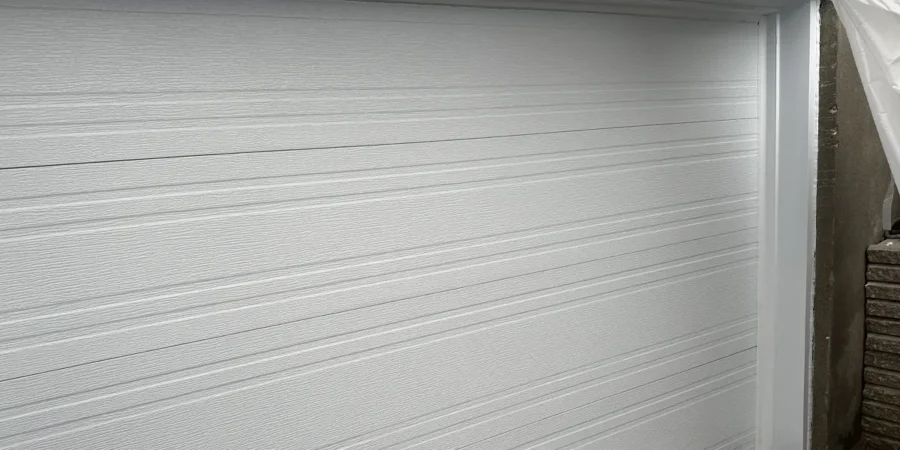
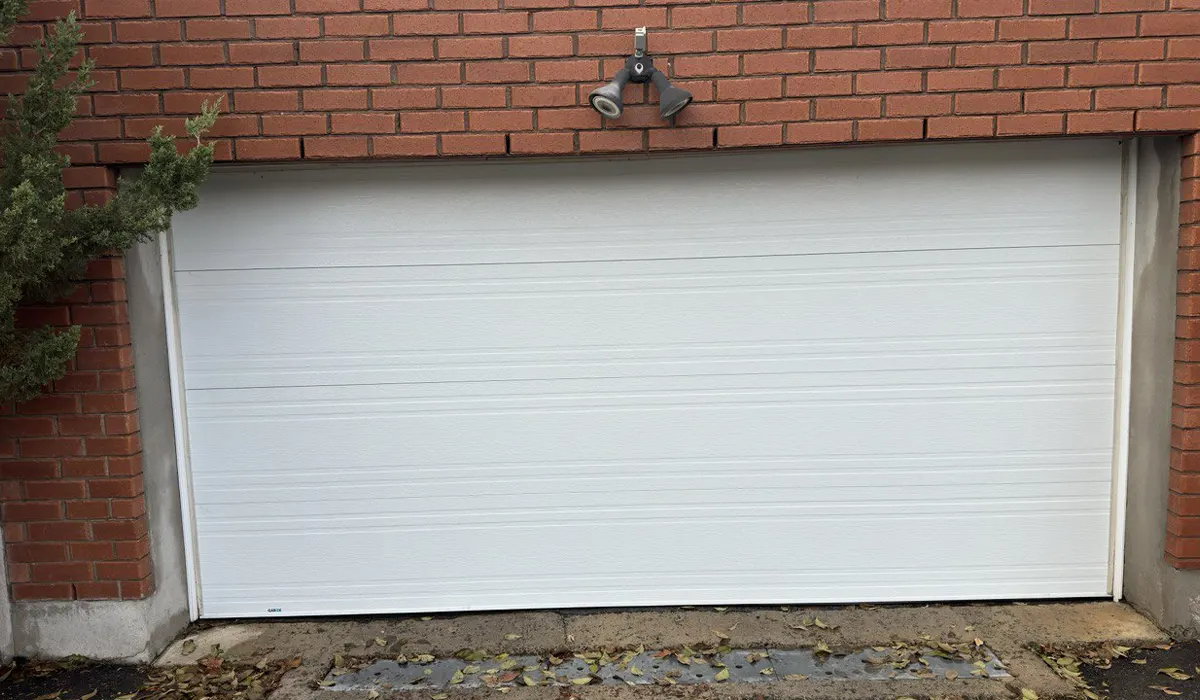
Winner: Insulated steel sandwich door with polyurethane core
Why?
- Structural durability: Dual skins + bonded foam create a torsion-box effect that resists dents and warping better than single-layer steel.
- Corrosion protection: Hot-dip galvanizing, baked-on polyester paint, and optional vinyl-wrapped finishes form a triple barrier; annual rinse keeps salt from attacking edges.
- Energy efficiency: R-12–R-18 keeps garages, mudrooms, and rooms above the garage warmer, reducing ice buildup on door edges.
- Hardware longevity: Weight is moderate compared with wood; balanced doors mean springs last longer.
- Design flexibility: Raised-panel, carriage-house, modern flush, even faux-woodgrain finishes match any architectural style.
Five Maintenance Habits to Maximize Reliability
- Bi-annual wash & inspect – Rinse salt and grit with mild soap every spring and fall; check paint chips, seal with touch-up paint immediately.
- Lubricate moving parts – Use lithium-based spray on hinges, rollers, and spring coil twice a year; wipe excess to avoid dust buildup.
- Tighten & test – Every six months, tighten track-mounting lag screws and hinge bolts; test door balance (it should stay mid-height when disconnected).
- Replace bottom seal every 3–5 years – A supple rubber seal prevents drafts and ice adhesion.
- Schedule professional tune-up – Annual spring calibration and safety inspection catch frayed cables or weak springs before failure.
Ready for a Door That Works in Every Season?
Upgrade to a Reliable Steel Door with Porte Garage Van Horne
When you’re investing in a new garage door, reliability is peace of mind—especially in Montreal’s demanding climate. Our experts at Porte Garage Van Horne recommend and install premium insulated steel sandwich doors that stand up to salt, cold, and everyday wear far better than any other material. We’ll help you compare R-values, panel gauges, and finish options, then size springs and openers for smooth, quiet operation.
Why choose Porte Garage Van Horne?
- Certified technicians with decades of local experience
- Quality Canadian and U.S.-made doors built for northern climates
- Precise installation and yearly maintenance plans
- 24/7 emergency service across Montréal, Outremont, Côte-des-Neiges, and surrounding boroughs
Get a free at-home consultation today. Call us at 514-555-7670 or request a quote online at portegaragevanhorne.ca. Let’s equip your home with a garage door that looks fantastic—and keeps working flawlessly—year after year.